
May 2026 Market Update
Strong Markets Despite Volatility
Markets closed at all-time highs last week despite continued uncertainty over the geopolitical climate. Here’s what we’re keeping an eye on over the coming weeks.
What Happened Last Week
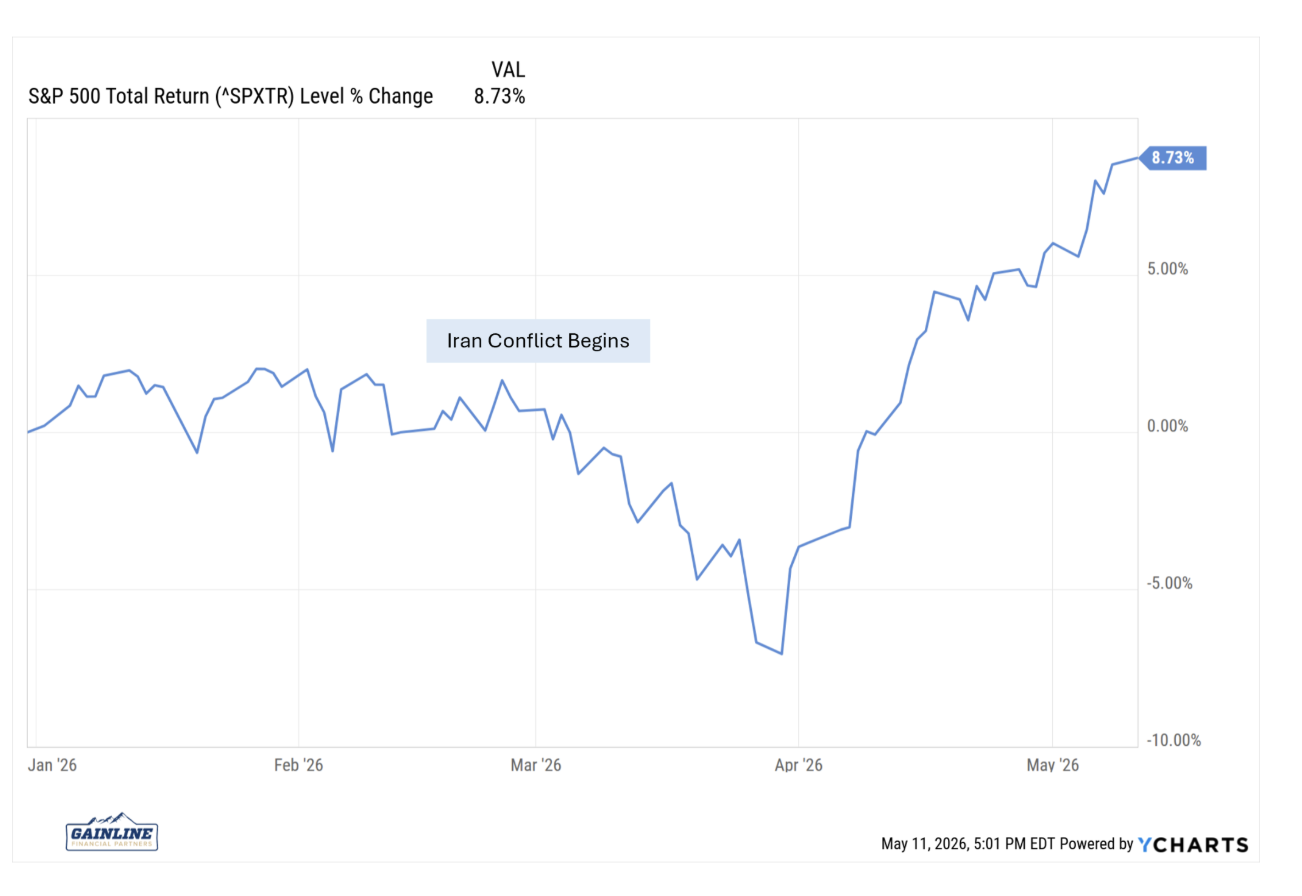
The S&P 500 and Nasdaq hit all-time highs last week on the back of a really sustained recovery throughout April. Despite uncertainty on whether a U.S.-Iran peace framework is feasible, the S&P 500 is up over 9% and Emerging Markets have accelerated over 10% year-to-date. A lot of what happens heading into the week will just come down to whatever new headlines show up on the geopolitical front.
The Iran Conflict and Oil Prices
Over the past two months, markets have reacted to the escalation of the Iran conflict with the kind of volatility we typically see during geopolitical uncertainty. What we’re seeing isn’t unusual: markets tend to reprice risk in real time, often overshooting in both directions before settling. Historically, periods like this have been temporary.
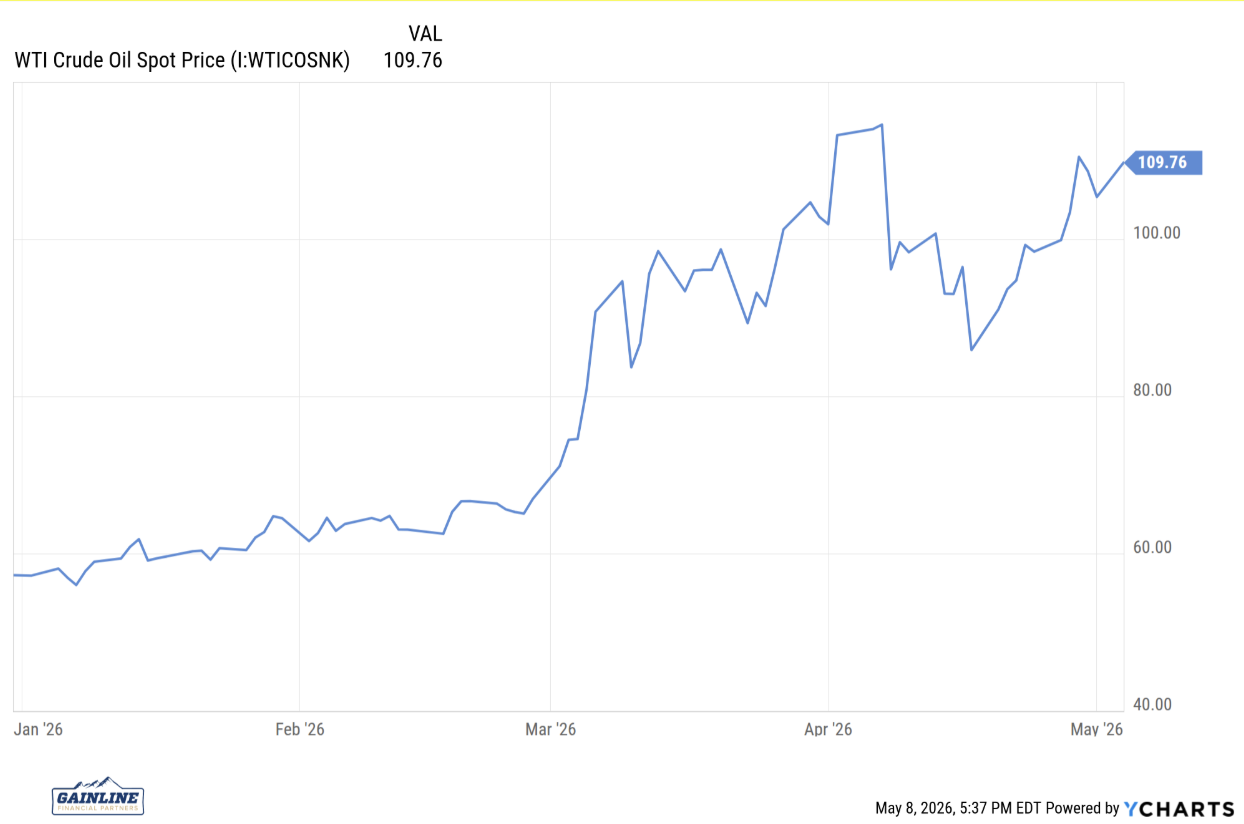
The most concrete economic impact has been on oil supply. The Strait of Hormuz is one of the most critical chokepoints for international oil, and its effective closure has pushed crude prices well over $105/barrel compared to the $65–75 range we were seeing before the conflict started. It’s one of the biggest reasons people are feeling squeezed at the pump and at the grocery store right now, even as equity markets are performing well.
A couple points on how this is playing out internationally: the Euro Stoxx 50 has seen more pressure, as European markets tend to be more directly impacted by geopolitical risk in the region. The U.S. bond market has acted as a stabilizer, with yields moving lower and prices rising as investors seek safety, helping offset some equity volatility in diversified portfolios.
The Fed and Inflation
Inflation has been picking back up slightly, and there’s more disagreement than usual among Fed officials about the path forward for interest rate adjustments. Since the aggressive rate increases that brought inflation down from its pandemic highs, we’ve been working toward a more stable environment. April’s inflation reading came in at 3.3%, and the Fed and most economists are really targeting a 2-2.5% range as optimal. We’d describe where we are now as a moderate, likely temporary bump rather than anything structural, but it’s worth taking seriously in terms of how portfolios are positioned. One thing worth watching is how long elevated energy prices stick around. Historically, consumers can absorb higher oil prices for a year or so before it starts to meaningfully pull back spending and growth. We’re not there yet. Inflation is a real consideration in how we’re positioning portfolios right now, but it’s not driving decisions the way it was a few years ago.
Why Corporate Earnings Are Telling a Different Story
Even with all of that noise, corporate earnings have been really strong. Companies are making more money than they were before, and investors are willing to pay higher multiples for those earnings. A lot of that traces back to AI. We’re starting to see clearer winners and losers emerge, with some companies better articulating how AI plays into their go-forward strategy than others. This can drive profits and productivity gains, and provides long-term optimism for continued market growth going forward.
How We’re Positioning Portfolios
Markets are back to all-time highs and in a strong place. Our thought process right now is to make hay when the sun shines and ensure your portfolio has sufficient cash for the next 18-24 months. If we’re putting money to work, we’re continuing to be very methodical about it. We still see a strong long-term economic outlook, but we’re not in a place where we’re saying let’s accelerate. There’s a good balance of go-forward optimism and risk out there, and we want to stay prepared for both sides of that.
A big part of that is how we’re thinking about cash right now. Sitting in too much cash means taking on more inflation risk than we’d like. If you’re earning 3 to 3.5% on cash and inflation moves up to 3.5 or 4%, you’re slowly losing purchasing power over time. Our best long-term defense against inflation is the growth side of the portfolio. Stocks have historically outpaced inflation over long periods of time, which is exactly what protects your purchasing power. The tradeoff is market volatility, which is real, especially with markets at all-time highs. So the balance we’re focused on is making sure everyone has roughly 18 to 24 months of cash needs on hand, with bond allocations providing further insulation beyond that.
That’s why we’re maintaining the steady hand, staying focused on diversification, and continuing to make sure every portfolio has the right tools in place to manage volatility. The market-neutral and managed futures strategies we’ve started implementing for applicable plans this year performed well through that February to March timeframe and helped mitigate some of the uncertainty and the big swings. We don’t think volatility is going away anytime soon, and we wouldn’t expect a straight march upward from here. Continued ups and downs are part of what we’re preparing for.
How much cash is the right amount? That’s very specific to each person’s situation, and it’s something we always incorporate in our planning process. If you have questions or want to talk through where you stand, we’d love to hear from you, learn where you are, what’s coming up, and how we can make sure your plan reflects it.